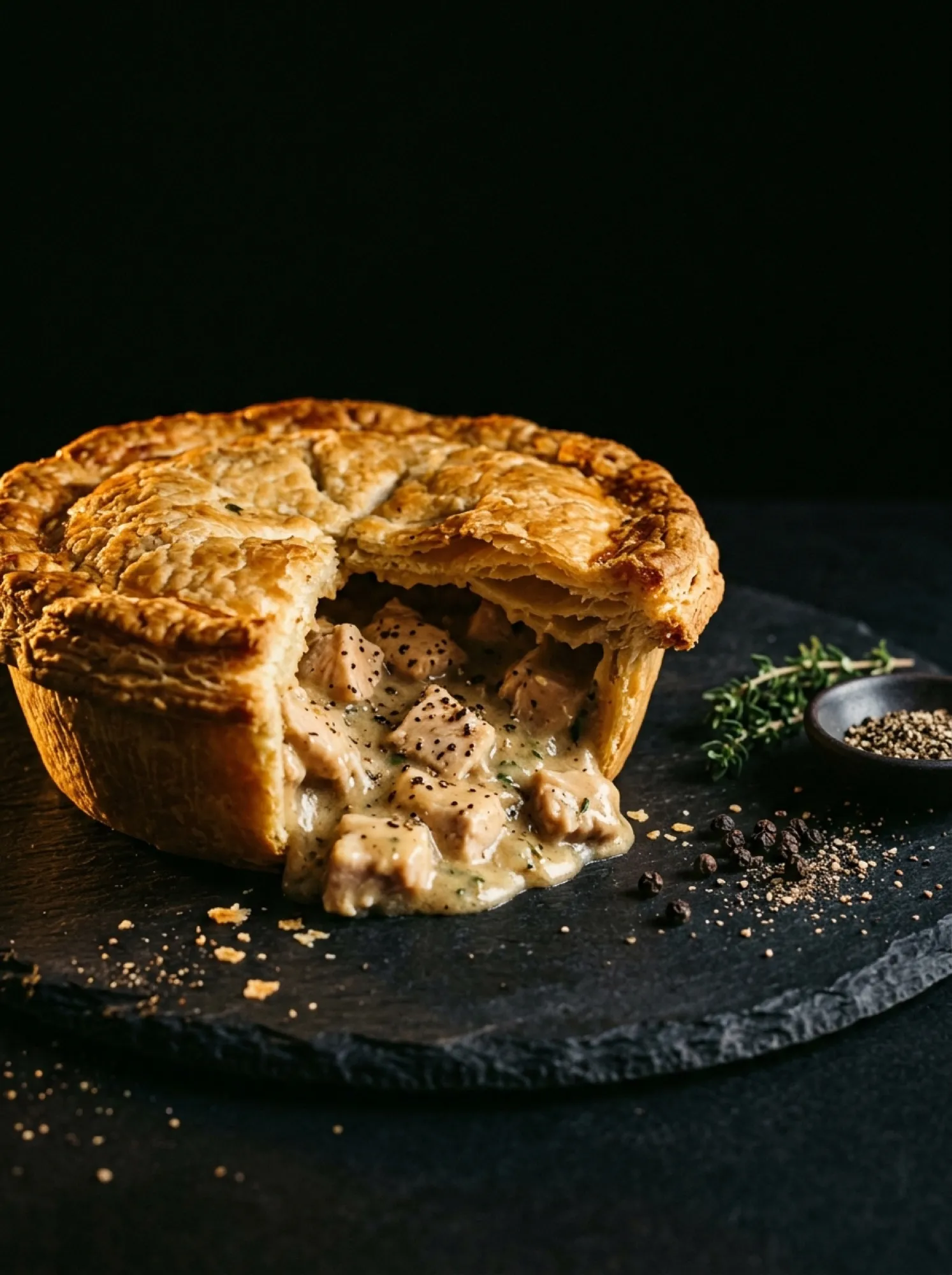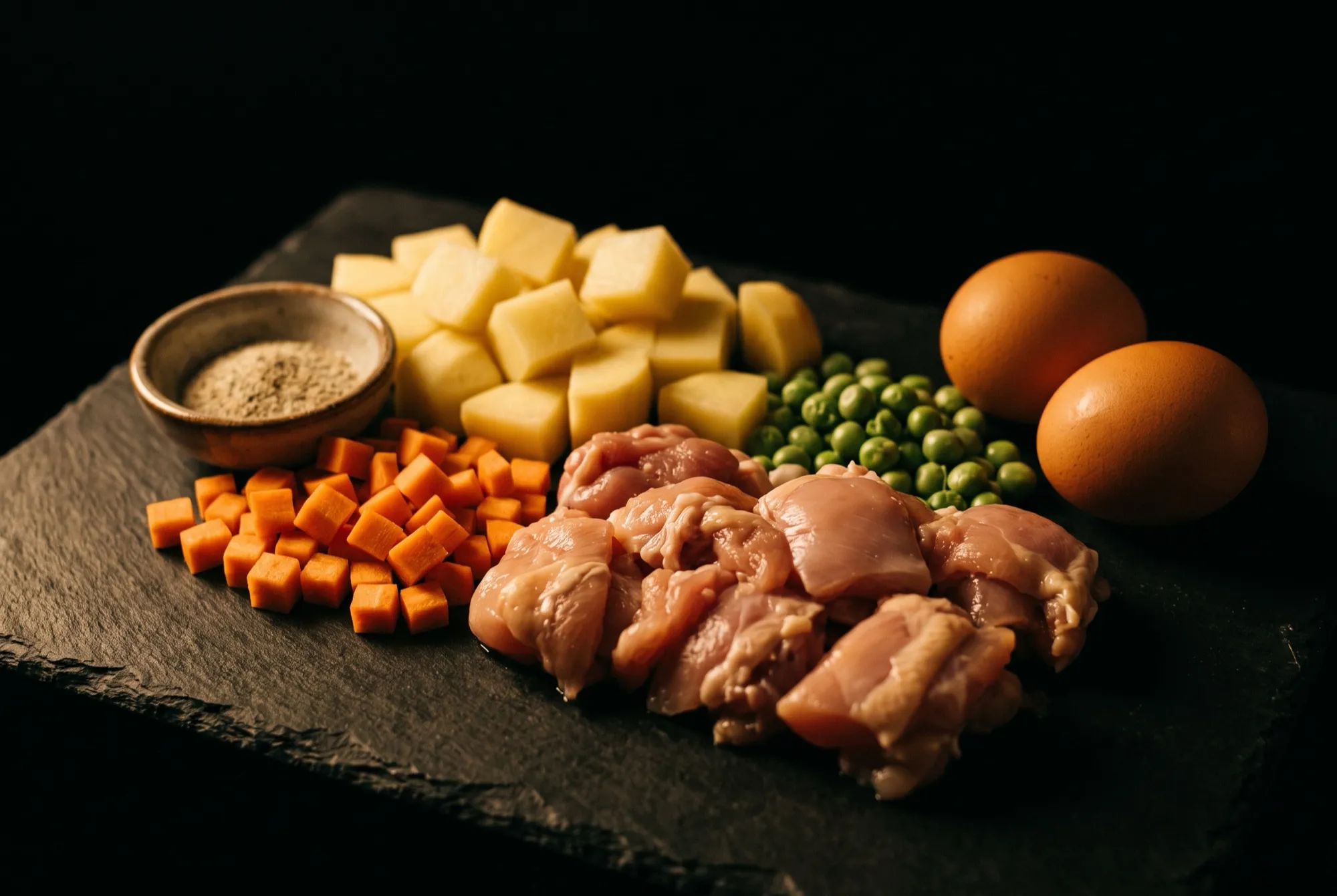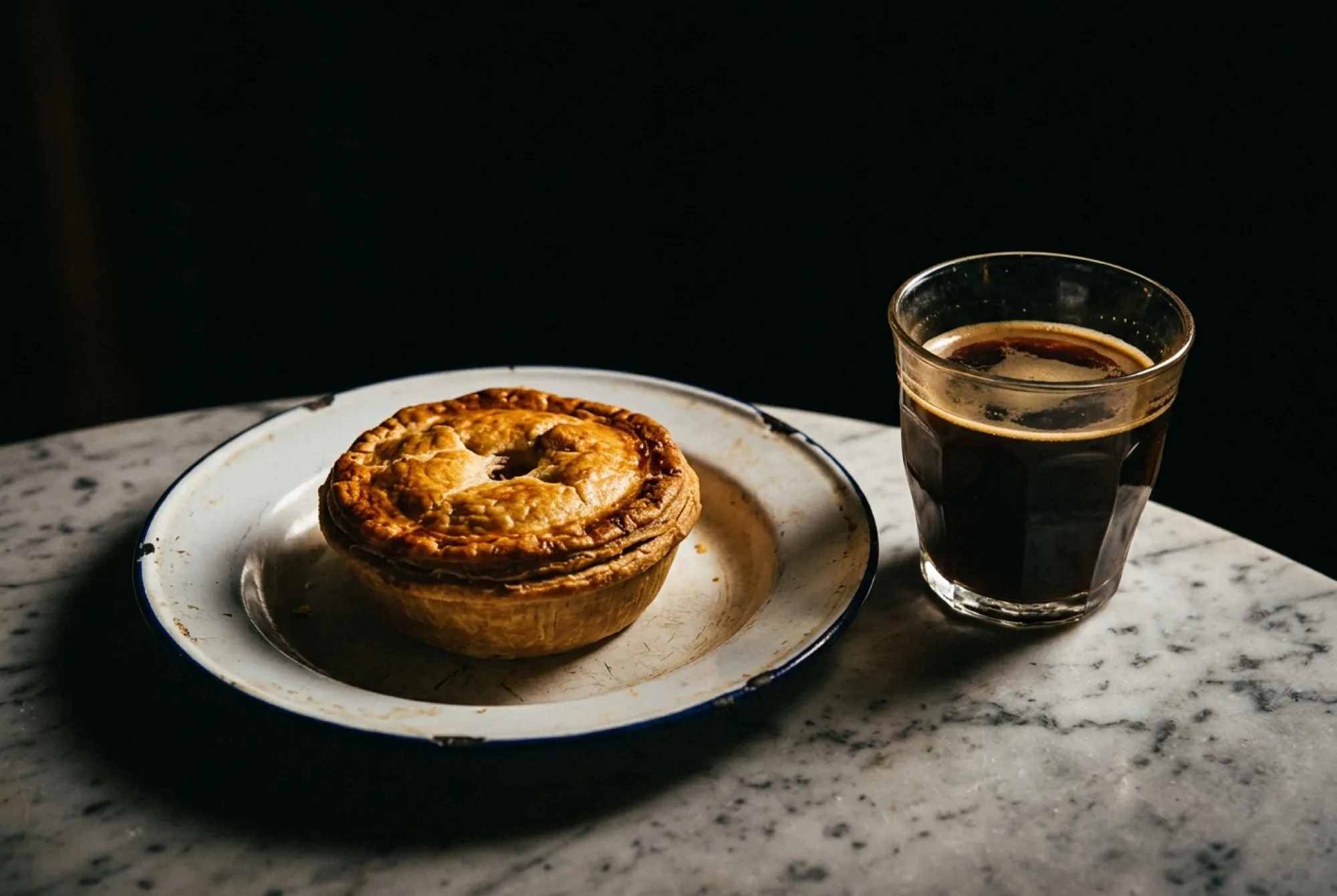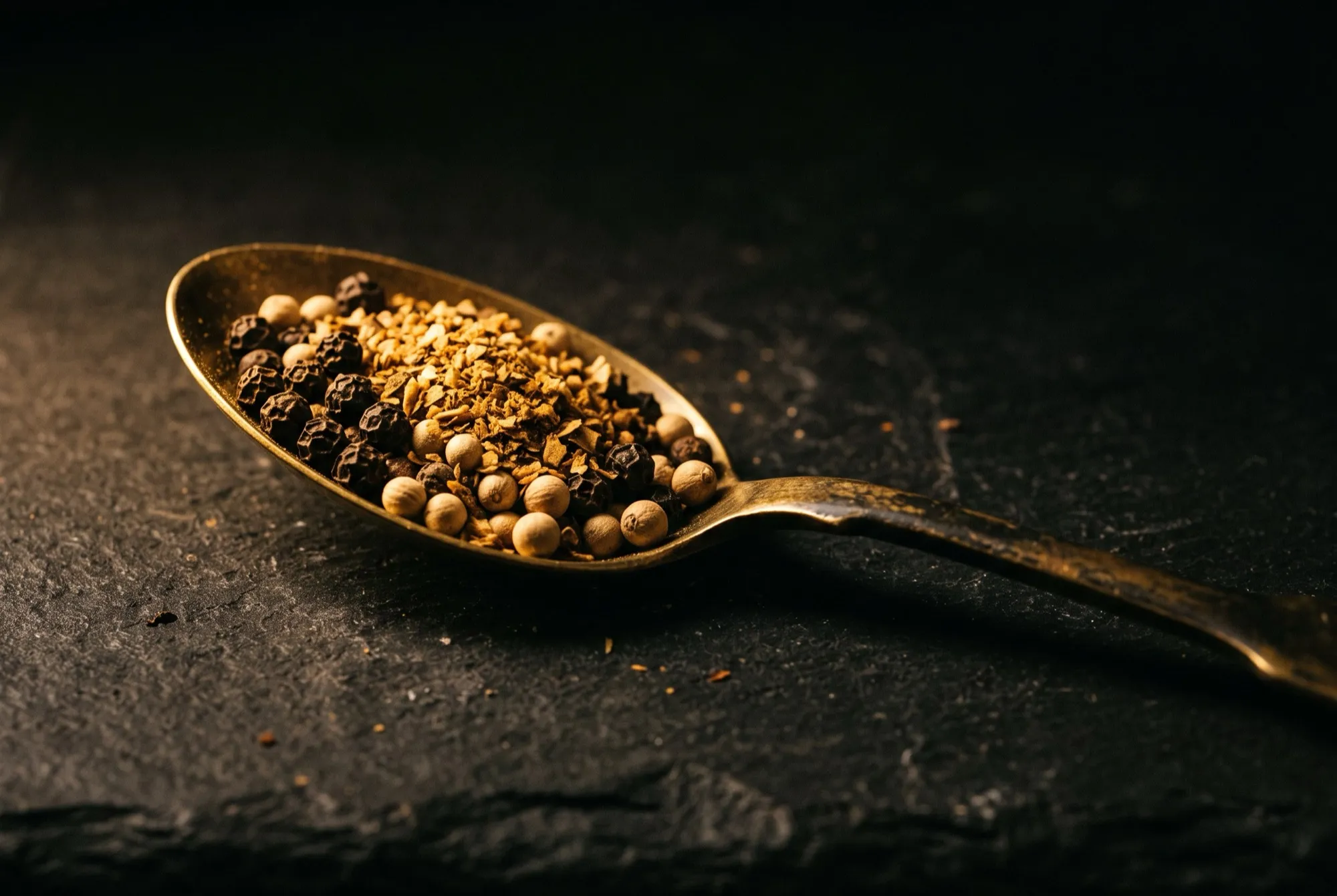
Seasoning matters more in a chicken pie than in most dishes because the filling is sealed inside pastry and cannot be adjusted at the table. Old-school Singapore cooking leans on pepper, white for gentle warmth and black for a bolder bite. DonChef's Original Chicken Pie uses a spice blend we keep private; the Black Pepper Chicken Pie turns the pepper up.
Why is seasoning so important in a pie?
Seasoning is important in a pie because a pie is sealed. With a bowl of soup or a plate of noodles, you can add salt, pepper or chilli at the table. With a pie, the filling is locked under a crust before anyone tastes it. Whatever seasoning went in at the stove is the seasoning that comes out of the oven.
That puts the whole burden on the cook. In our kitchen the standard is the seasoning of the recipe Chef Don Lim created in 1983, which every DonChef pie still follows. The filling has to be seasoned for how it will taste after baking, inside pastry, possibly reheated, eaten by someone who will never meet the person who made it.
Why does a filling taste different hot and cold?
A filling tastes different hot and cold because temperature changes how we perceive flavour. Saltiness and spice tend to read more strongly in warm food and fade as it cools. A filling that tastes perfect straight from the pot may taste flat once it is cold, and a filling seasoned to be eaten cold may taste harsh when hot.
A pie spends time at every temperature: hot from the oven, warm on the counter, cool on the way home, hot again after reheating. Good pie seasoning is the kind that holds up across all of them. That is learned by making the same pie many times, which is one reason a recipe with decades behind it is worth protecting.
What role does pepper play in old-school Singapore cooking?
Pepper plays a large role in old-school Singapore cooking, especially in Chinese and Hainanese kitchens. White pepper gives a gentle, rounded warmth that sits in the background of many soups, porridges and braises. Black pepper is sharper and more aromatic, and it is the headline in dishes such as black pepper crab.
Old-school chicken pies here often carry that pepper warmth. A fan archive of a long-closed Bencoolen Street bakery makes a good case for why old-school pies taste peppery, and it is worth a read even though that pie was a different one from ours. It cuts through a creamy gravy and makes chicken taste more savoury. In a cream-based filling, a little pepper is the difference between rich and heavy.
What spices are in the original Don pie?
The original Don pie uses a spice blend that we keep private. Our product notes call it a secret spice blend, and we are not going to undo that here.
We know that can sound like marketing. It is not meant as mystique. A spice blend is the part of a recipe most easily copied once written down, and it is the part most closely tied to the cook’s own taste. Every family kitchen has something like it. What we can tell you is what it is for: to make chicken, potato and gravy taste of themselves, warmly, without any single spice shouting.
How is the Black Pepper Chicken Pie seasoned differently?
The Black Pepper Chicken Pie is seasoned with an extra peppery kick, in the words of our menu. It uses the same pastry as the Original and a chicken filling built around black pepper. The creaminess of the filling carries the pepper. Its filling also goes under the mash of our Chicken Shepherd’s Pie. Read more on the Black Pepper Chicken Pie.
How should you season a chicken pie at home?
If you make chicken pies at home, a few principles will help, whatever recipe you use:
- Season the filling while it is hot, then taste it again once it has cooled. Adjust for the cooled version, because that is closer to how it will taste inside the pie.
- Use pepper for warmth, salt for depth. Too much salt makes a creamy gravy taste flat and thirsty.
- Season the potato too. Unseasoned potato is the commonest reason a filling tastes bland.
- Remember the crust carries no seasoning of its own beyond a little salt, so the filling has to do the work.
- Write down what you did. The point of a recipe is that you can do it again.
If you want the general method in more depth, there is a careful guide to seasoning a filling on chickenpie.net.
Why seasoning is part of “original”
Seasoning is part of what makes a pie original because it is the most personal decision in the recipe. Two cooks can use the same chicken, the same potato and the same pastry and still make pies that taste unmistakably different. When customers tell us our pie tastes the way they remember, a large part of what they are recognising is the seasoning in Chef Don Lim’s recipe. That is why it stays exactly as it is in every DonChef pie. The other parts of the pie are described in the anatomy of the original, and the rest of our essays are in the craft notes.